Introverted iNtuition and the Conspiracy Theorist

Reality Does Not Exist
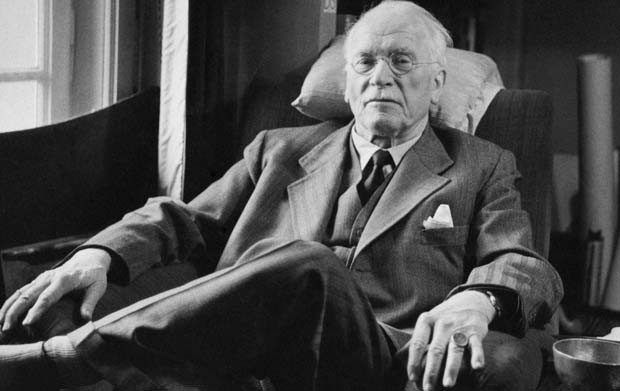
Carl Jung and Intuition

First, let’s start out with what Carl Jung said about Introverted iNtuition.

“The peculiar nature of introverted intuition, when given the priority, also produces a peculiar type of man, viz. the mystical dreamer and seer on the one hand, or the fantastical crank and artist on the other.”

In modern terms, this is either the person who predicts the future with an uncanny insight, or the tinfoil-hat-wearing lunatic that has predicted the end of the world every year since 1999. The line is very thin, and in most cases they are the same person until a prediction comes true. Only then are they a “genius.”

Intuition vs Sensation

It’s best to include what the opposite of Intuition looks like to get a reference point. Sensation and Intuition are both perceiving functions, meaning that they collect information like a sponge in either an active or passive way. 

Sensors generally focus on the details as they exist in the physical or concrete realm. What it is, how it smells, the color, the texture, etc. These are descriptions of objects or events in their most overt form.

What is a Texture?

Intuitives generally focus on the meaning or theme of an object or event. What it means, what it says about humanity, what implications it yields, what the forces behind the event are, etc. These are intuitive leaps, as they say, into the essence of the object.

Though S and N both perceive the same thing, their conclusions couldn’t be more dissimilar.

Cognitive Functions and MBTI

Understanding the Myers Briggs Type Indicator: The 8 Cognitive Functions

Introverted Intuition is one of the 8 cognitive functions within the MBTI model, and arguably it is the most fascinating to discuss. It is denoted as “Ni” within the Type community, and I will write it as such for the remainder of this article.

Ni has been described in many colorful ways, and here are some of my favorites:

  • Abstract conceptualization
  • Non-linear thinking
  • Patterns within patterns
  • Dot connecting
  • Seeing the future
  • Uncanny insight

Also, do yourself a huge favor and check out one of my favorite Youtube MBTI celebs, Love Who, as he describes how the INTJ in particular manifests as a conspiracy theorist.

When you think about the list of bullet points above, you can easily see how these can be viewed with positive outcomes. But the negatives are much juicier!!

  • Abstract conceptualization
    • Not grounded in a reality that others can easily follow.
  • Non-linear thinking
    • Cannot get their point across, bouncing around from concept to concept, grasping at connections that aren’t there or are too far-fetched.
  • Patterns within patterns
    • Can become unhinged with discussions of conspiracy pyramids, Illuminati, Reptilians, New World Order, etc.
  • Dot connecting
    • Connecting dots that shouldn’t be connected.
  • Seeing the future
    • Apocalypse, dystopian nightmare, negative outcomes, dark clouds on the horizon.
  • Uncanny insight
    • Others view you as creepy and suspicious…”How did you know that…” but not in a good way.

Describing Introverted Intuition (Ni)

Now you just have to articulate it!

The way I like to describe it to others is having thousands of random data points (your experience, news articles, social media, things you see in public, things people say, facial expression, etc.) that you are accessing to merge into a single idea or theme. 

The brain of the Introverted iNtuitive (Ni) is trying to make sense of the world by connecting seemingly unrelated events together. It’s trying to distill down the world into its essential element or “truth.”

Swayze on the eyes: Back to School - where learning is optional
Makes sense

I am reminded of a very random quote from an obscure Rodney Dangerfield movie called Back to School. In it, a young Robert Downey Jr. does not want to go to his college’s football game because football is a “crypto-fascist metaphor for nuclear war.” Say what now?! That’s something an unhinged intuitive would say! To come to that conclusion takes many leaps in logic and possibility to arrive where he did. Also, if you were to ask how he came to that analysis? 

“I’m not entirely sure,” would be the answer.

Conspiracy Theorist

I have seen the documents!

It’s easy to see how this style of perception can lead one down the road to crankery and tinfoil-hatism. The common theme of Ni users is that they feel like an alien in a human’s body, and the use of Ni is the reason why. It’s really no wonder that Carl Jung himself (an INFJ) went insane at the end of his life. 

However, we have to admire those throughout history who changed the world through the use of their Ni:

  • Elon Musk
  • Nikola Tesla
  • Issac Newton
  • Ayn Rand
  • Friedrich Nietszche
  • Karl Marx
  • Mark Zuckerberg
  • Stephen Hawking
  • Vladimir Lenin
The Current War's real hero: why Nikola Tesla was the coolest scientist ever
Nikola Tesla

…to just name a few!

To find more content from an Ni user (such as myself), find the links below:

  1. Youtube
  2. LinkedIn
  3. Blog
  4. Etsy
  5. Twitter

How to Read 100 Books in a Year

In 2018 I read 25 books. 2019 I read 75. 2020, I made 100 my goal. And I achieved it. Here are some solid tips for how to make it happen.

Pin on Reading by a window

Create more reading time by getting up 45-60 mins earlier everyday.

If you don’t have the “time” to read more books because of kids, work, or other obligations, this tells me you need to physically CREATE more time in your schedule. You create more time by getting up earlier each morning (45-60 mins) and reading. Give yourself a buffer to make coffee as well. I discovered that with a really good book, you will find yourself increasing the amount of time you give yourself in the morning to read. This creates a compounding result throughout the year.

It’s also a simple math equation. If you read 15-20 more pages a day over 7 days, then you are going to complete, on average, 140 pages per week. That’s not even including time you read before bed or during the middle of the day. This tactic can easily add 12 books a year to your total.

Pin on Education is the Success to key

Read books you actually want to read, thus making it easier to spend longer sessions in a reading flow state.

“Life is too short to read a bad book.” – James Joyce

Don’t waste your life reading a book you hate. The advice I received, and continue to pass onto others, is this: if you aren’t hooked by page 30, dump it. 30 pages is plenty to know if the book is going to be worth finishing or not. 

When you only read what you want, and thoroughly look forward to reading each day, you will spend more time reading during each reading session. You will find yourself in a reading flow state that can make 60 mins feel like 15. Once again, time is all it takes to accomplish these goals. 

Flow State: How Improv Can Strengthen Your Brain - One Rule Improv

It’s not speed-reading or skimming the intro sentence of each paragraph– it’s TIME.

Stop watching sports altogether, which frees up nights and weekends.

This is going to hurt a lot of people. But notice I am not saying to give up Netflix or TV–at least right away. Sports are where I started getting back time in my day to read more. NFL and college football on Saturday and Sunday are minimum 3-hour commitments. Add in pre-game, and it’s 4 hours. If you are a multiple sport fan, throughout the week you can easily spend 5-10 additional hours watching highlights or other sports. We can comfortably say we spend 16 hours a week watching sports, and that applies all year-round. There is only a short period of time where there aren’t multiple sports being played.

Some very rough math here: 20 pages per hour X 16 hours = 320 pages. That’s a normal book length. Boom, now we just added a book per week by cutting out sports. 

The Second City

Read 3-4 books at a time to break up the monotony of the same genre.

Have a stack of 3-4 books on your nightstand from vastly different genres. I suggest fiction, psychology, history, and personal development. If you are winding down your ability to focus on one genre, you can re-energize your mind by diving into something completely different. Having too much of one genre will burn you out more than add to your fulfillment. Also, if you are reading all fiction, I guarantee you will start to mix up storylines and characters. 

Bedside Table Stack of Books | Floating nightstand, Stack of books, Table
Only acceptable nightstand

Sprinkle in shorter books (200 pages or less) to get some easy wins.

Like all long term goals, you need to get some easy wins early and often to keep the fire burning with your motivation. I blatantly admit to choosing books under 200 pages so that I could finish a book in 1-2 days and check off another tick mark towards my goal. Do not choose 900-page epics on the history of the Peloponnesian war with size 6 font and margins that are .25 inches. Do yourself some favors and sprinkle in some easy wins.

Set a reading challenge goal through Goodreads to keep track of your progress.

Goodreads | Meet your next favorite book

I am going to shill for Goodreads for a quick second. Every year since 2018, I have embraced their yearly Reading Challenge. It’s fun to keep track of your goals and to see others you are connected with setting and striving for their own. As you update your reading goals, Goodreads tells you how far behind or ahead you are. The reason I suggest using Goodreads is that you have to measure your goals or you’ll never complete it. This is a universal fact. What gets measured, gets done. 

The other reason to use Goodreads is they have a great algorithm for suggesting other books based on those you’ve read. When you find one you want to read, you can add it to your “Want to Read” queue. This, in turn, strengthens their future recommendations for you.

Even though it is owned by Amazon, I always go to Goodreads for user reviews in lieu of Amazon. The literary pretentiousness at Goodreads is much greater than Amazon, and thus they grade books more harshly. Whereas Amazon gives nearly every book a 4.5/5, Goodreads hardly rates anything higher than a 4.0/5. The standards are much higher, thus I trust the user base more on Goodreads.

Read every day no matter what.

Never Skip Brain Day - Fun Philosopher Shirt" Art Board Print by  The-Nerd-Shirt | Redbubble

The key phrase here is: no matter what. At a certain point, you will feel guilty for days you don’t read. Much like those who are gym rats and have to go every day or they immolate themselves, voracious book readers develop the same habit over time. As the comedian Brian Regan said many years ago, “There has never been a good argument against reading. There has never been a point/counter-point that debated the merits of reading.”

And just to let you know…audiobooks aren’t reading ;).

To book me for MBTI consultations–find my Calendly on the sidebar or here!

For more of my content, you know where to find me:

  1. Youtube
  2. LinkedIn
  3. Blog
  4. Etsy
  5. Custom MBTI T-Shirts from Me!

Book Review: Please Understand Me by David Keirsey (1978)

David Keirsey – Medium
Please Understand Me Book Review

David Keirsey has sold over 4 million copies of his book in the last 30 years. Please Understand Me remains, to this day, as the book that best defines each of the 16 personality types.

Temperaments

Keirsey’s major contribution to personality type was his classification of the 16 types into 4 distinct Temperaments. They are:

NT: Intuitive + Thinking

NF: Intuitive + Feeling

SP: Sensing + Perceiving

SJ: Sensing + Judging

Along with those combinations, he also named each temperament using an archetype. For example, NTs are the Rationals; NFs are the Idealists, SPs are the Artisans, and SJs are the Guardians. This helps us to generally understand the mindset and structure of the types in a way that just listing the 2 letters would never allow.

matrix

Temperaments are not new to Myers Briggs. However, the Keirsey model and the official MBTI model (called “Function Pairs”) are slightly different. The official MBTI model lists the temperaments in a different combination, instead opting for: NT, NF, SF, ST. This is a more straightforward approach to creating the temperaments, as it simply combines the 2 middle functions.

Keirsey opted to approach things differently. Instead of simply adding the 2nd and 3rd letters together in a uniform manner, for the Sensor types, he added the 2nd and 4th letters together. 

When I discuss Temperaments, I am working from the Keirsey model.

Take the Keirsey Temperament Sorter here (its 70 questions).

The 16 types

The descriptions that are given in Please Understand Me are some of the most precise and wonderfully elegant writings that I have come across in studying Typology. 

Here are a couple of examples:

“Here is the herald, the spirited bearer of tidings. But underneath this effervescent enthusiasm is a person fiercely dedicated to “meaning” in life. (page 74, the ENFP)

“INFP’s seek unity in their lives, unity of body and mind, emotions and intellect. They often have a subtle tragic motif running throughout their lives, but others seldom detect this inner minor key.” (page 176, the INFP)

“Inefficiency is especially rejected by ENTJs, and repetition of errors causes them to become impatient. For the ENTJ, there must always be a reason for doing anything, and people’s feelings usually are not sufficient reason. (page 178, ENTJ)

“INTJs need only to have a vague, intuitive impression of the unexpressed logic of a system to continue surely on their way. Things need only seem logical; this is entirely sufficient.” (page 181, the INTJ)

There are many more examples, but do yourself a favor and discover them in full when you buy this book after you finish this article.

Broke And Busy: An Alternative to Traditional Persona Modeling Using Keirsey  Temperament Theory - Intercom

How to Use in your Daily Life

As professional typologists or enthusiasts, something that naturally happens is trying to Type people in your daily life. I imagine it’s just like studying psychology–now you’re diagnosing everyone’s mental illnesses. What the temperaments allow you to do, instead of trying to memorize all 16 types, is to only think of 4 possible temperaments as a starting point. 

It is much easier to start typing someone and think. “He sounds like an NF Type,” than it is to try and decipher an INFJ from an ENFP. 

My Rating and Recommendation

I can solidly make the recommendation to read Please Understand Me as the 1st or 2nd book you read when starting your typological journey. I give this book a 95/100. It can benefit anybody for any application in their life. It does not take an expert nor someone with a psych background to enjoy the description of E vs. I; NT vs. NF; or INFJ vs. ESFP. It is probably one of the rare MBTI books that can be enjoyed across the entire spectrum of personality types.

To book me for MBTI consultations–find my Calendly on the sidebar or here!

For more of my content, you know where to find me:

  1. Youtube
  2. LinkedIn
  3. Blog
  4. Etsy
  5. Custom MBTI T-Shirts from Me!

Book Review: Gifts Differing by Isabel Briggs Myers. (1980)

There are plenty of good places to start learning about MBTI. I am often asked what books to read to begin, so I am starting a series of book reviews related to typology and MBTI.

Book review on Gifts Differing

Carl Gustav Jung

I would actually NOT start with Carl Jung (CGJ) and Psychological Types, as it is dense, esoteric, and better reserved for the 3rd or 4th book after a more simple framework has been established. I think reading his book as your first foray into Typology might turn you away from it altogether. Even though in most cases we should always start at the beginning, this is a special circumstance where it will not serve you well.

Carl Gustav Jung

Where to Start

I recommend starting with Gifts Differing, by Isabel Briggs Myers. It is essentially the Bible for the Myers-Briggs Type Indicator (MBTI). This book had been in the making for decades before it was finally released in the 80s. Isabel and her mother Katherine, had been developing an assessment that could take the incomplete theories of CGJ and make them into a digestible format that could be taken by anybody across the world. Carl had never truly ventured outside of his clinical practice to apply Type to the world, so this mother-daughter pair made it happen!

Amazon.com: Gifts Differing: Understanding Personality Type  (8601234605485): Isabel Briggs Myers, Peter B. Myers: Books
Gifts Differing by Isabel Myers

Book Overview

Gifts Differing, by Isabel Briggs Myers, is surprisingly technical; it contains lots of graphs, charts, and standard deviation analysis of all kinds of things such as Type and academic pursuit, Type and IQ, Type and romance, Type and career, Type and learning styles, etc. For those who need more than anecdotal evidence to be convinced, this book is shockingly dense with longitudinal studies to support the reality of Type.

The book also covers some more complicated parts of MBTI like cognitive functions, which is the true beauty of MBTI. Along with this, is how the types develop over a lifetime, another major differentiator of MBTI vs. other assessments. As all Typologists resoundingly agree, we can’t talk about personality type unless we talk about development. 

The prose is quite remarkable and is only rivaled by the great David Kiersey who wrote Please Understand Me. Because, think about it–you can only use so many words to simply describe somebody (direct, quiet, shy, outgoing, gregarious etc.); it’s when you start using allegories and poetic nuances that you truly dig down into the depths of each type. Gifts Differing contains this language. After all, Isabel Myers was an INFP, so she gets right to the heart of each type. Her connection to each Type is thoroughly apparent throughout this book.

Please Understand Me: Character and Temperament Types: Keirsey, David,  Bates, Marilyn: 9780960695409: Amazon.com: Books
Please Understand Me by David Keirsey

Book Rating

I give this book an 85/100. It definitely cannot be missed when studying MBTI! I consider it essential reading for a baseline understanding of MBTI, and how Isabel and Katherine began to form their assessment over many years. It’s a healthy combination of anecdotal and statistical information that will appeal to all “types” of personality enthusiasts. 

For more reading list suggestions, look forward to some of my future blog posts. 

In the meantime, take a look at the links below!

To book me for MBTI consultations–find my Calendly on the sidebar or here!

For more of my content, you know where to find me:

  1. Youtube
  2. LinkedIn
  3. Blog
  4. Etsy
  5. T-Shirt!

Interview with Lindsay Johnson

I had the supreme honor to interview Lindsay Johnson, CEO and co-founder of Snugg.me and host of the wildly popular Youtube channel known as LiJo.

For those who don’t have time for the whole interview, the TL:DR version is below.

Why Did She Create Snugg.me?

Snugg.me is a platform that allows YouTube influencers to engage more effectively with their audiences. The problem Lindsay quickly found was that there was not a single platform that could integrate all the tools needed to be truly effective. Snugg integrates payment, video, and scheduling in one platform, which reduces the friction involved with 3rd party calendars, installing Zoom, and getting paid. Snugg is able to accomplish these objectives all in one place. To book Lindsay for the show, I actually used the platform myself. Pretty seamless!  

Advice for NT Females at Work

Generally speaking, the NT female struggles in corporate America, not because of their competence, but because their qualities are more masculine (eg. assertiveness, bluntness, drive, etc). I asked her if she had ever encountered this in the workplace, and Lindsay said she was lucky to have managers with Te (Extraverted Thinking), so they respected her straightforwardness and direct manner in meetings and with projects. 

She suspects that negative interactions or miscommunications were likely with those who possessed Fi (Introverted feeling) and Ti (Introverted Thinking). As with most NT (Rationals) types, she was not good with the pleasantries of the workplace (‘Good Morning” in emails; “What did you do this weekend?”). Her direct manner of responding in one line and hitting “Send” had to be consciously bred out of her. In Type development for the NT’s, being more tactful is a great place to start!

Copyright Keirsey.com

Emotional Intelligence vs. MBTI

There is a growing movement that advocates Emotional Intelligence as the best indicator for employment and career success. According to Lindsay, Typology is still a better holistic approach to assessing candidates rather than what they score on an Emotional Intelligence test. Scoring “well” on Emotional intelligence doesn’t mean you are done developing as a person. 

Jung, and many of his modern day predecessors (Nardi, Beebe, Berens, etc.) advocate for a lifelong development model based on cognitive functions, archetypes, and self-actualization. THAT is where the beauty of MBTI truly separates itself from the others, in that it has a path that is actionable for every Type. Unfortunately, that is not part of the modern day MBTI messaging, thus many people feel underwhelmed after going through a workshop.The corporate MBTI model is much different than the Jungian model- this is the main crux of the divide amongst Typologists. 

Pin by Sara Herlein on Psyche | Types of psychology, Mbti, Psychology
John Beebe model of all 8 Jungian functions

When working with me, my clients experience the deepest dive possible into their personality, covering all facets of the tool to an extent that might, at first, seem overwhelming. My development model starts with a 5-week course that works macro-to-micro. What that means is we look at your Type from 10,000 feet and then gradually zoom into about 2 ft. Throughout the sessions, I provide actionable tasks to develop parts of your personality that we agree are “lacking” or are “blind spots.”

Creating Good Content

Lindsay discovered the key to creating great content lies in engaging her Fe function (AGAIN!).  She asked herself, “What do others actually want to see?” and “ How do I make it entertaining?” Most of us in the MBTI community are familiar with the great Frank James, who hilariously acts out each of the 16 types in various life scenarios. He is the inspiration for my own channel, even though he is a lowly INFJ. Love you Frank!!

Its your boy, Frank James

Lindsay, however, felt she could not give each of the Types justice by themselves. She felt there is simply too much to personalize to truly do each of the types correctly. So, she pivoted to something she DID know very well, and that is the 8 cognitive functions. Lindsay found that she could teach her audience, in a funny way, how each of the 8 cognitive functions work, and how one would realistically see them presented in life. Her trajectory in this regard has been remarkable to someone who watches all her videos.  

Thinking (T) Problems

Thinking types, for all their analytical and objective abilities, are often sorely out of touch with the emotional spectrum and what is generally well-received in society. When it comes to humor and timing, sometimes T’s don’t read the room all so well. As Lindsay points out, a logically funny joke, may not be well-suited during certain environments. As T types grow into their true Self, they learn to incorporate their F side for more harmonious interactions. 

Timing Jokes

Best MBTI Team

If Lindsay could pick 4 Types for a project–any project–what would they be? She says INTJ, ISTP, ENFJ, and ENTP. Interestingly, the ENFJ was specifically chosen to, once again, bring the human element to the team. That dastardly Fe function rears its head again! When you look at companies making massive strides today, Lindsay believes the Extraverted Feeling function is the reason why.

Where to Find Lindsay

Snugg - Become an Influencer

To connect with Lindsay, go here:

Snugg.Me

YT videos

To book me for MBTI consultations–find my Calendly on the sidebar or here!

For more of my content, you know where to find me:

  1. Youtube
  2. LinkedIn
  3. Blog
  4. Etsy
  5. Thinkific

Interview with Professor Dario Nardi, PhD

World renowned neuroscience expert and personality consultant Dario Nardi, joined me to discuss his new book and many other topics around MBTI. As a fellow INTJ, Dario and I got along very well.

His Latest Book

The Magic Diamond is Dr. Nardi’s newest book. It is a combination of the last 10 years of research proceeding the release of his magnum opus, The Neuroscience of Personality. Dario has been a student in the Jungian tradition for 30 years, and The Magic Diamond is an amalgamation of all that wisdom. The concept of the Magic diamond is one of integration that, over your lifetime, combines your best and worst cognitive functions into a fully realized Self.

The Magic Diamond: Jung's 8 Paths for Self-Coaching: Nardi, Dario:  9798682551965: Amazon.com: Books
The Magic Diamond by Dario Nardi

Career Impact on People’s Brains

An intriguing revelation from Dario’s research is the extent to which a person’s occupation impacts brain function and activity. Workplace stressors and pressures to engage a part of your personality that is not your true nature, can STILL affect results on an EEG machine. As MBTI practitioners, this fact should compel us to spend more time with our clients to truly get to the bottom of our client’s true nature.

CT and Brain Imaging; My Brain Lab Session with Dario Nardi – Cognitive  Typology
Each part of the brain labeled by module and activity

Personality Hacker 

In the interview, Personality Hacker was mentioned briefly. Dario has done an exclusive 12-week course through their paid membership page. Also, Personality Hacker created what I would consider the best model for understanding the top 4 cognitive functions, which is known as the Car Model.

Personality Development Tools: The Car Model — Personality Type and  Personal Growth | Personality Hacker

I would also recommend their podcast which covers every conceivable aspect of MBTI you could possibly imagine.

Brains are Different by Culture 

Interesting enough, and hardly ever talked about, is the fact that culturally, brains develop differently and have distinct patterns and energies. Did you also know that brain scans show up completely differently with left-handed and right-handed people?

Ethical Standards within MBTI Community 

The Type community has always maintained that you never tell someone what their Type is. “You are an ENTJ; You are an ISFP,” are huge No-Nos in the professional Typology community. The client is always the final arbiter of their Type. Dario makes it clear that it’s not our job as analysts to tell people their Type, but to have the client discover their most likely patterns and tendencies themselves.

MBTI in Relation to DiSC and Five Factor Model 

Dario makes an outstanding case for the superiority of MBTI over other assessments such as Five Factor Model and DiSC due to their lack of a “development path.” MBTI, and the underlying theory of Jung, looks at personality through the lens of developing yourself over your lifetime. When you push aside the corporate MBTI model, you discover a huge gulf of knowledge around developing your personality that is sadly lacking in other personality assessments.

What Do The Letters in DiSC Stand For? – Resources Unlimited: Human  Resources Training & Consulting
DiSC model

Type Gives us a Lens to See Through 

We don’t often seek to examine how we look at ourselves and others. If we do, we don’t have a way to define the method or framework. “The unexamined life is not worth living” is a great starting point, but what tool will we use to examine our life? MBTI is the tool to do just that. Unique as we all are, there are repeatable and demonstrable traits that we all exhibit within a certain personality Type. Having a shared language and model to work within, then gives us a way to start implementing the many type development plans that exist within MBTI.

Jung vs Modern-Day Type Literature

Being a true scholar of Jung, Dario was quick to point out that the current Type literature that exists deviates from Jung in one specific way: it’s overly positive. If you read Psychological Types, the descriptions of the 8 cognitive functions are essentially 80% good and 20% bad. Jung was mostly concerned about how these functions could manifest in a negative way, and being cautious about overstating the positive. In today’s modern MBTI literature, the opposite is expressed: “Most people are generally psychologically healthy, so here’s one line at the bottom of the page that describes a potential way things could go wrong with your Type.”

Biography of Carl Jung: Founder of Analytical Psychology
Carl Gustav Jung

Using Type with Newbies 

Dario says that he does not roll out the cognitive functions model to newbies right away when introducing Type. This is generally in line with the corporate MBTI methodology. Personally, understanding the cognitive functions took me an entire 2 years of self-study before it solidified in my head. It is best to nail down an understanding of the dichotomies first, before diving deeper into the “function stack.”

360 Assessment 

I have made this same point in my presentations to clients– if you get a result from the MBTI assessment that you aren’t quite sure about, go and ask your mom, spouse, colleague or confidant if the results match. Likely, they will be able to instantly say yay/nay to the result. The paradox of psychology is that it’s tough to use your own brain to evaluate itself– let someone else objectively evaluate the assessment results.

Neuroscience of Personality 2.0 

Dario is working on a 2nd book that is compiling even more data than his 2011 best seller. After almost 10 more years of data has been collected, the time has come to expound and expand on his previous work. Though this book will be “less Type oriented than some Typologists would like,” he assures us that it will have plenty of Type in it! 

Please check out the links below and find a way to connect with Dr. Nardi. 

Books

The Magic Diamond

Neuroscience of Personality

8 Keys to Self-Leadership

Best links to Find Dario

www.RadianceHouse.com

www.DarioNardi.com 

www.facebook.com/dnardi/notes. (people can find various articles by Dario here) www.linkedin.com/in/dnardi22 

Neurosciences et Typologie – Conférence de Dario Nardi, PhD (in English)


To book me for MBTI consultations–find my Calendly on the sidebar or here!

For more of my content, you know where to find me:

  1. Youtube
  2. LinkedIn
  3. Blog
  4. Etsy
  5. Thinkific